


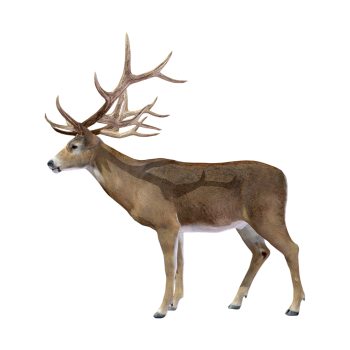
White-tailed deer (3D animated model)
The white-tailed deer is an empty-toothed deer subfamily, empty-toothed deer. The white-tailed deer have a broad white tail with a reddish tan in summer and a slightly grayish brown in winter. An adult white-tailed deer has antlers, the antlers growing on the trunk stretch forward and the forks grow upward. The white-tailed deer's horns are not forked, and its wide brown tail is covered with a piece of white hair. When the white-tailed deer runs forward in danger alarm, its tail is tilted upward, revealing white. It is said that it can confuse the pursuer, and the name of the white-tailed deer comes from this.

Skull of roe deer
Roe deer (scientific name: Capreolus capreolus) is a small and medium-sized deer of the genus Roe deer (Capreolus) of the family Ceraceae (Cervidae). Because of its small size, high alertness and unique behavior, it is widely distributed in temperate to cold temperate forests in Eurasia. It is a familiar "forest spirit".

spotted deer specimen
The spotted deer (scientific name: Axis axis) is an even-hoofed animal of the genus Deer, Deer. Standing shoulder height 0.6-1 meters, body length of about 1.5 meters. Bucks horns, trifurcated, up to 75cm long. This species has a red body color and white on the abdomen, inside of the legs and under the short tail. Males tend to be darker in color and have black markings on their faces. Characteristic white patches appear in both sexes and extend in longitudinal rows throughout the animal's life. A black dorsal stripe runs across the animal's back.

Sika Deer Skull Specimen
Sika deer (scientific name: Cervus nippon) belongs to the genus Cervidae, with a body length of 140-170cm, a shoulder height of 85-100cm, a tail length of 12-13cm, and a weight of 100-150kg. Males have horns, while females have no horns. The horns of stags are usually divided into 3-4 forks. The sika deer has large, erect ears, slender limbs, a well-proportioned trunk, and a short tail. The fur is red, with multiple rows of irregular white spots along the sides of the spine, the lower jaw is white, the nasal surface and cheeks are sandy yellow, the back of the tail is dark brown, the lower part of the tail and the groin are white, and the abdominal hair is pale brown.

Ezo Deer Skull Specimen
Ezo deer or known as Hokkaido sika deer, is a subspecies of sika deer, mainly found in the Hokkaido region of Japan. Bucks are large in size, weighing more than 200kg in autumn. The length of their horns is usually more than 35 inches (about 0.89 meters), and the longest record is 44 inches (about 1.12 meters). Hokkaido sika deer are social animals, usually in small groups.

Bucks (with 3D animated models)
Refers to male deer, known for their spectacular antlers and strong physique. Antlers shed and regrow every year, and newly grown antlers are usually larger and more spectacular, which is a sign of attracting mates and showcasing strength. They usually live in diverse ecological environments such as forests, grasslands, and wetlands. It is a herbivorous animal that feeds on grass, leaves, tender branches, and fruits. The senses are very sensitive, with excellent hearing and smell, which helps to survive in the wild and escape predators. In many cultures, the stag is seen as a symbol of strength, courage, and leadership. Images often appear in works of art and mythological stories.

Female deer 3D model with animation fbx
She is a female individual in the deer family, known for her elegant and gentle nature. Usually possessing soft fur and slender limbs, displaying a unique beauty and agility. Plays an important role in deer herds, responsible for breeding and raising offspring. The body size is usually smaller than that of a stag, without the prominent antlers of a stag, but with sharp senses and quick reflexes. Eating plants, including grass, leaves, fruits, and bark. Living habits are relatively secretive, usually active in the depths of forests or grasslands. The female deer provides very thoughtful protection for her cubs, warning them of potential danger with sharp cries.

Bucks 3D model with animation FBX
It is a majestic wild animal belonging to the deer family. Known for its spectacular antlers and strong physique, it is an important member of many ecosystems. Antlers shed and regrow every year, and newly grown antlers are usually larger and more spectacular, which is a sign of attracting mates and showcasing strength. They usually live in diverse ecological environments such as forests, grasslands, and wetlands. It is a herbivorous animal that feeds on grass, leaves, tender branches, and fruits. The senses are very sensitive, with excellent hearing and smell, which helps to survive in the wild and escape predators. During the breeding season, male deer compete for mates by colliding their antlers.

Red Deer (Male) 3D Animation Model
It is a medium-sized deer species widely distributed in Europe, Asia, and North Africa. Known for its vibrant fur color and unique antlers. Strong in physique, males have spectacular branching horns, while females do not have horns. Antlers shed and regrow every year, serving as an important weapon for male red deer to compete for mates during mating season. The fur is reddish brown in summer and turns grayish brown in winter to adapt to changes in the environment. It is a social animal that usually lives in a family unit and is led by a male deer king. Food includes herbaceous plants, leaves, and tender branches. Not only is it an important member of the ecosystem, but it is also a significant symbol in many cultural and mythological stories

Red Deer (Female) 3D Animation Model
It is a medium-sized deer species widely distributed in Europe, Asia, and North Africa. Known for its vibrant fur color and unique antlers. Strong in physique, males have spectacular branching horns, while females do not have horns. Antlers shed and regrow every year, serving as an important weapon for male red deer to compete for mates during mating season. The fur is reddish brown in summer and turns grayish brown in winter to adapt to changes in the environment. It is a social animal that usually lives in a family unit and is led by a male deer king. Food includes herbaceous plants, leaves, and tender branches. Not only is it an important member of the ecosystem, but it is also a significant symbol in many cultural and mythological stories

Bucks Model 3D Animation
It is a type of mammal that lives around the world and belongs to the deer family. They are known for their majestic physique, strong limbs, and spectacular antlers unique to males. They usually live in forests, grasslands, and swamps, with plants as their staple food, including grass, leaves, fruits, and bark. Antlers shed and regrow every year, which is a significant sign of their sexual maturity. Bucks compete for mates during the breeding season through the collision of antlers, which is part of their survival competition. In addition, male deer are also important species in many ecosystems, playing a crucial role in maintaining biodiversity and ecological balance.

Male elk
Deer is the only deer species in the family Deer and genus Deer. Because its head and face are long and narrow like a horse, its horns are slightly different from other deer, its hooves are wide like cows, and its tail is slender like a donkey, it is also known as the Four Elephant. Its horn shape is unique, opposite to the horns of other deer. The front branch splits into smaller branches, while the back branch hardly splits. The head has a long and narrow snout, the exposed part of the nose is wide, the eyes are small, and the infraorbital glands are very prominent. The limbs are thick and the main hooves are broad and fleshy, with well-developed hanging hooves and a loud knocking sound when walking. Deer prefer swamp and wetland habitats, feeding on green grass and aquatic plants. Good at socializing, good at swimming, and enjoys eating tender grass and aquatic plants.

Deer skull
The elk (scientific name: Elaphurus davidianus) is the only deer species in the family Deer and genus Deer. Because its head and face are long and narrow like a horse, its horns are slightly different from other deer, its hooves are wide like cows, and its tail is slender like a donkey, it is also known as the Four Elephant. Its horn shape is unique, opposite to the horns of other deer. The front branch splits into smaller branches, while the back branch hardly splits. The limbs are sturdy, the main hooves are broad and fleshy, with well-developed hanging hooves, and there is a loud knocking sound when walking. I prefer swamp and wetland habitats and feed on green grass and aquatic plants. Good at socializing, good at swimming, and enjoys eating tender grass and aquatic plants.

Male roe deer upper skull
The roe deer (scientific name: Capreolus pygargus) is a species of deer in the family Deer and genus Deer. The body length is about 1.2 meters, the weight is about 30 kilograms, and it has a slender neck and large eyes and ears. No fangs, hind limbs slightly longer than forelimbs, short tail, male roe deer with horns, female without horns, male long horns only divided into three forks. They inhabit different types of deciduous forests, mixed forests, and forest grasslands, and are active in sparse forest belts, river valleys, and gentle slopes. The family group consists of female roe deer and their offspring, usually 3-5 individuals, and male roe deer only join the group in midsummer. Morning and evening activities, most active at night, herbivorous animals. Usually twins.

Western roe deer skull
The Western roe deer, belonging to the family Deer and genus Deer, is a small deer with a body length of only 95-135 centimeters, a shoulder height of 65 centimeters, and a weight of 15-30 kilograms. Cheeks gray, body color reddish, golden red in summer, deepening to brown or even black in winter. The color of the abdomen is light, and there is a tuft of white hair near the tail. The tail fur of female roe deer is heart-shaped, while that of male roe deer is kidney shaped. The tail is extremely short, only 2-3 centimeters, almost invisible. When frightened, they will shout loudly and raise their white tail hair. Only male roe deer have horns, are short and straight, and are 5-12 centimeters long. Unlike other deer, roe deer immediately begin to regrow after losing their horns.

Popular Models
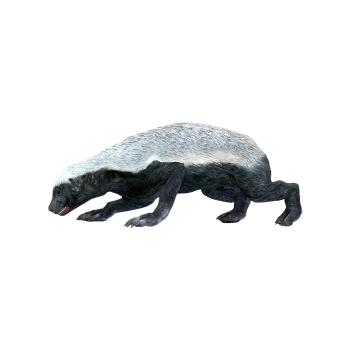
Honey Badger (3D animated model)
192 View
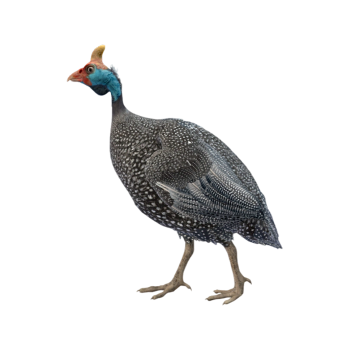
Guinea fowl (3D animated model)
163 View
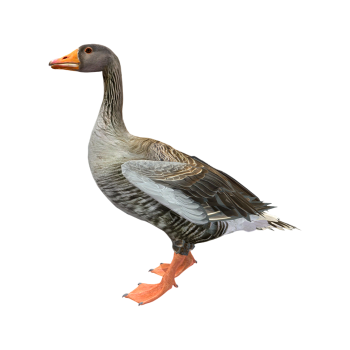
Wild Goose (3D animated model)
185 View
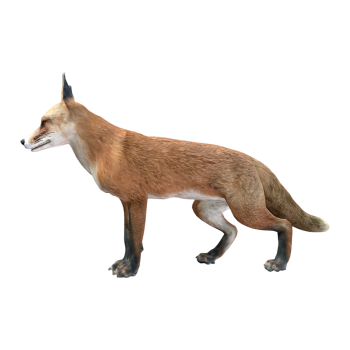
Red Fox (3D animated model)
153 View
Random Model

Mercedes Benz Maybach GLS600 Luxury SUV
1096 View

Du Song
737 View

D & G K Perfume
519 View

Entrance color light signal
878 View

Hugo Bretner Monument
858 View
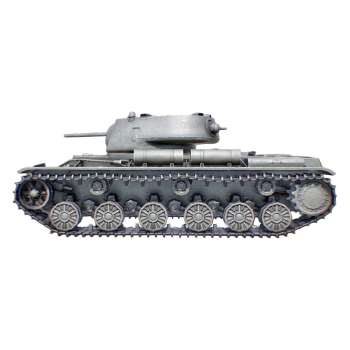
Soviet KV1 Heavy Tank
843 View


round glasses
748 View

Nagoya Damo Frog
816 View